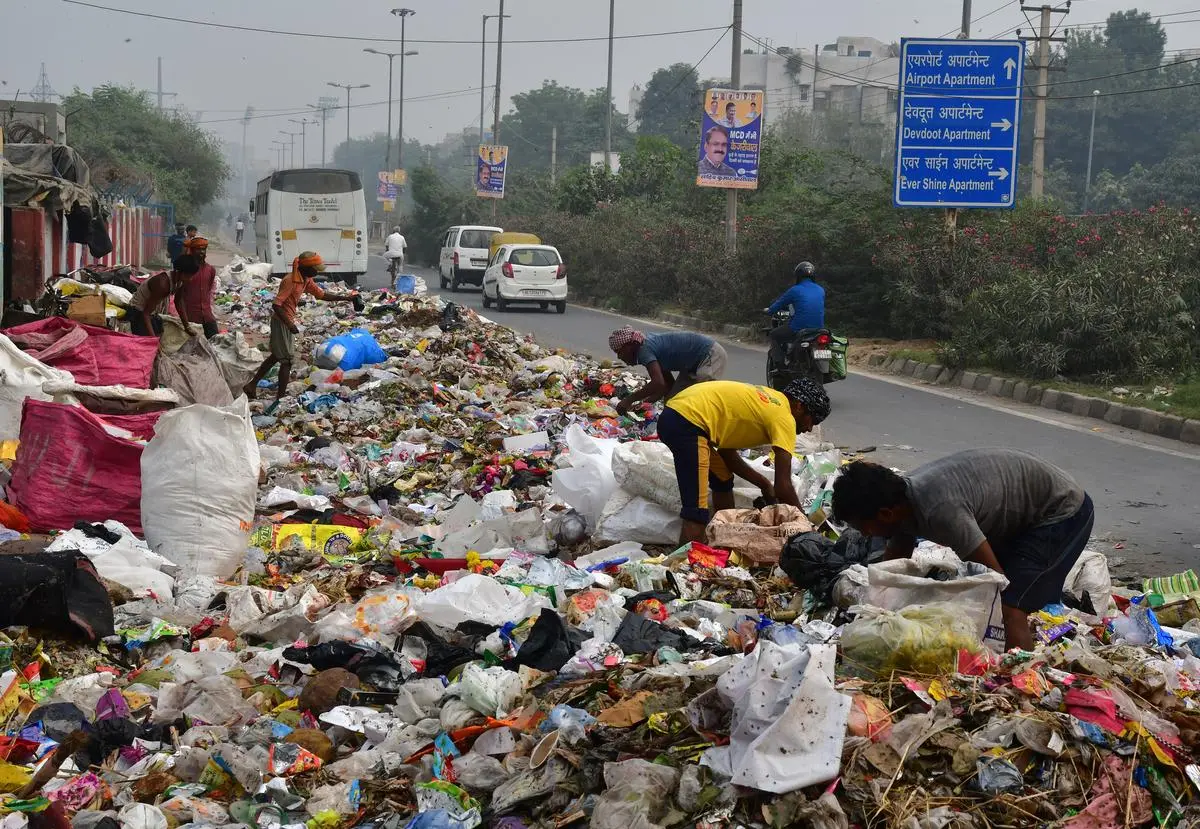
Most of Western cities were open landfills till a few decades ago despite advantages reaped from colonialism.
India still has some negative momentum from nearly 300 years of European colonialism. 700 years of Islamic occupation that destroyed native universities like Nalanada didn’t help.
"700 years of Islamic occupation" is just false. Some Muslim dynasties began through conquest, as many dynasties throughout Indian history did. But over centuries, Muslims integrated, intermarried, adopted local languages and customs, and became part of Indian society. Muslim-ruled states relied heavily on Hindu generals, officials, and allies, and their wars were largely fought over territory and power, not as some continuous occupation or religious war against Hindus.
Criticizing specific rulers is fine. But Indian Muslims are indigenous to India, and their ancestors converted for many reasons, including Sufi influence, social mobility, and escape from caste discrimination.
Of note, Mughal India accounted for roughly 20–25% of global output. It was British colonial rule that exploited and stole insane amounts of wealth and led to India’s economic decline. Comparing centuries of complex Indo-Hindu-Muslim history with British colonial occupation and extraction makes no sense. And calling Indian Islam a foreign invasion is misplaced bigotry.
Above comment is accurate. All Indian indigenous systems were destroyed (education, governance, taxation etc) during the 1000 years of foreign occupation. India still operates under the oppressive system imposed by the colonizers to subjugate the population. The shock and ripple effects of the plunder, destruction and subsequent partition has crippled the subcontinent. It might take several centuries to rebuild and recover.
Mughal India was roughly 20–25% of global output. It was British colonial rule that exploited and stole insane amounts of wealth and led to India’s economic decline. Comparing centuries of complex Indo-Hindu-Muslim history with British colonial occupation and extraction makes no sense.
Some Muslim dynasties began through conquest, as many dynasties throughout Indian history did. But over centuries, Muslims integrated, intermarried, adopted local languages and customs, and became part of Indian society. Muslim-ruled states relied heavily on Hindu generals, officials, and allies, and their wars were largely fought over territory and power, not as some continuous occupation or religious war against Hindus.
Indian Islam is not a foreign invasion that destroyed. Indian Muslims are indigenous to India, and their ancestors converted for many reasons, including Sufi influence, social mobility, and escape from caste discrimination.
this economic output comparison is brought up often, without proper context.
During the time that the British were looting India, the industrial revolution happened. That also helped India's economic decline, as does the fact that today, around half India's population are in agriculture, while contributing around 14% to the GDP.
The industrial revolution separated economic output from population size.
While European states invested in building up their human capital over the past 200 years, most of the Indian economy was turned into an extractive colonial state. The lack of investment set the country back by a lot. After Independence, it turned its back sharply on Capitalism (rightfully so, having suffered under extreme capitalism for a couple of hundred years). Unfortunately, that didn’t end up working very well either, since it lacked the strong Institutions and State Power required to succeed that way. Politically, Partition of the Country destroyed existing economic structures and trade routes that had existed for hundreds of years, setting back all countries in the subcontinent even further… and then you also had multiple wars.
Honestly its quite amazing that the subcontinent has remained as stable as it is today; it could very easily have descended into the carnage we see today in Myanmar.
The account you're replying to was created 49 minutes ago and has 2 comments, both on this thread, one already flagged and dead. Please don't waste your time engaging bait.
You don't need trade routes to invent latrines and garbage cans. European exploitation doesn't create a caste system where it's seen as beneath you to do the most basic of socially hygenic tasks. Obviously there's something more going on
Even though pollution in India is bad and getting worse everyday, smog in Delhi is/was an exception, not the national norm (even among tier 1 cities, let alone tier 2 and below). That too not year round (though I must say Delhi/NCR is increasingly becoming unliveable).
Probably not one thing but the sequence of Islamic colonialism, followed by European colonialism, followed the splitting of India, the introduction of consumerist lifestyles (plastic crap), globalism, etc.
I imagine any society where the existing stable system is violently destroyed will have issues with people not having their original culture and way of life, but also they probably had to just survive, and didn’t have time for environmental concerns.
The Islamic period in India was one of the most prosperous periods in India’s history, ever. India was responsible for 25% of the worlds GDP during Mughal Emperor Jahangirs reign. The decline of Indian economy is directly a consequence of British Policies.
Not true. It was rich, yes. The emperors took it all. The common people got nothing. Hence the big tombs etc. Indigenous institutions were destroyed, libraries and universities burnt. Religious structires destroyed and natives under constant threat and conflict. This is directly reflected by the complete lack of pioneering work in science, technology, astronomy, mathematics, philosophy and literature during this period. All of that was pre islamic invasion.
Yes prosperous. Minus the brutal and barbaric genocide, oppressions, etc. Obviously such colonialism destroys culture and wealth even if a few powerful outsiders extract wealth for themselves. You’re whitewashing Islamic colonialism for some weird reason.
Who are the outsiders? India has been a melting pot for “outsiders” forever; from the Greeks, Huns, Turks and Persians to Africans (Habshis in the Deccan). Once the dynasty started they considered themselves “Hindustani” and took title reflective of that. Persian was the language of bureaucracy not just in the Mughal but also the hindu Maratha courts.
Painting a period that saw the largest number of hindu temples being built, the largest ever expansion in wealth of the country as some kind of despotic enslavement is historical revisionism. Yes certain islamic rulers were more orthodox than others and attempted to suppress other religions; such is the nature of the Monarchic rule. But in the net, the early modern period in India was undoubtedly a golden age for the region.
The temples built were by hindu empires like the vijayanagara empire or the marathas later who ruled significant parts of India coinciding with the turkic invasion and occupation that you are conveniently not taught in schools. The trukuc invasion left behind a trail of destroyed temples and coties. From sun temple of multan to martand temple in kashmir to ayodhya to mathura to kashi to hampi to belur and halebidu.. its literally a trail of ruins left behind. I dont even know why you are trying to argue that turkic occupation of India was somehow good for natives. The lack of pioneering art, science, technology, philosophy, astronomy, mathematics and literature during this period shows that ordinary people were just trying to survive and could not produce any of these works. Almost all of those great works were before 1000 ad.
And no, hindu and muslim conquests were NOT alike. Krishnadevaraya defeated kalinga. Instead of destroying konark sun temple, he came back and built a similar stone chariot in hampi.
The same hampi was plundered and burnt down a century later by islamic foreign invaders.
The marathas defeated mughal empire, but you dont see delhi, fatehpur sikri etc in ruins.
Hindu conquests were like regime or government change for ordinary people. At best some changes in taxation. Islamic conquest meant their cities burnt down, institutions destroyed and life destroyed.
These are not my hallucinations, the turkic invaders proudly wrote about this themselves.
You wrote all that to make a nearly worthless semantic argument about how an act of invasion, genocide, and theocratic authoritarianism is different from what you’re calling colonialism? Okay.
Indians and Hindus were obviously subordinated under Islamic rulers who arrived from elsewhere. A simple five second search would show you they imposed different taxes if you were not a Muslim. What are you even arguing about here?
The Mughal empire cannot possibly be characterized as theocratic in any meaningful way for most of its history (of course there are exceptions). They weren’t even devout muslims themselves. They married hindu Rajputs and adopted Indian customs, translated the classical hindu texts into Persian etc.