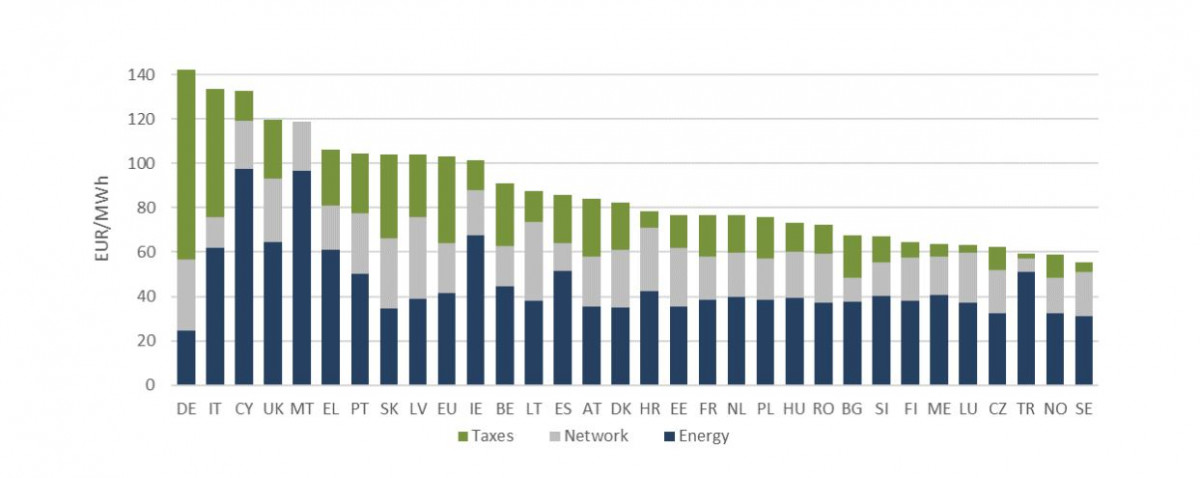
Yes, and even when you consider those costs, it pales in comparison to the lives lost and negative externalities of coal, oil, and gas usage. These include climate change, particulate pollution, environmental release of mercury, devastation of vast swaths of the environment worldwide, and other factors that may be hard to quantify but negatively impactful.
There was a post on HN the other day that talked about how hard it is for humans to see beyond direct first order effects. Once you get to indirect or N order effects, it's nearly impossible for humans to fully appreciate.
People see nuclear and it's easy to draw a straight line accident -> damage. People know about mercury is seafood, but they can't seem to attach fossil fuel burning to that problem even when told. It's a disconnect that I hope as a species we will one day figure out. Global warming and weather changes? Good luck.
It helped that there was a whole campaign propped up by the fossil fuel companies to demonize nuclear.
Don't get me wrong - I think there are issues with nuclear - primarily the waste heat - generally ruins the rivers or other local bodies of water even assuming radioactive waste is contained.
Because it feels good is my guess. Over here in europe, Germany basically did the same thing. They now have higher cost AND pollution per kwh than france, who has MUCH more nuclear.
Oh and germany often has to sell the energy for very cheap when the renewables are having a peak, and buy pretty expensively when they are having a drought.
From the article, it seems to be a graph detailing how much they pay with all exemptions applied. Which, according to the article itself, only about 4% are eligible. The article doesn't seem to state how much the partial exemptions make up of the final price either. Could be 1% of the exemption, could be 99%.
> For example, Europe's Statistical Office Eurostat says the average power price for industrial consumers in Germany was about 14 cents/kWh in 2017 – the highest in Europe. But the following graph also reveals that German companies with maximum exemptions would pay the lowest price in Europe (energy price component):
> Out of 46,400 industrial companies active in Germany, 96 percent paid the full surcharge in 2017, while only four percent benefitted from exemptions, according to the association. At the same time, 41 percent of electricity used by industry is partially exempt from the surcharge, while 43 percent is not exempt at all. The remaining 16 percent of the power originates from own generation facilities, part of which is also exempt. The utilities forecast that German industry will use a total of 246 TWh in 2019.
And I was actually talking what the customer is paying, because that is what is relevant to most people.
Did you account for the footprint of building the plant (all that concrete manufacturing produces lots of CO2)? And the footprint of the waste storage (again concrete, potential for leaks)? Footprint of mining? Lots of Uranium produced in the the developing countries (Kazakhstan, Uzbekistan, Ukraine) which have poor safety standards.
The problem with peaks is not a defect of renewables, it is a temporary problem, which will be resolved once we build international power grid.
> Did you account for the footprint of building the plant (all that concrete manufacturing produces lots of CO2)?
Same can be said about renewables and such, which produce MORE pollution per amount of capacity, along with having a even worse footprint.
> And the footprint of the waste storage (again concrete, potential for leaks)?
Are you talking about waste from setting it up or waste from operation?
> Footprint of mining? Lots of Uranium produced in the the developing countries (Kazakhstan, Uzbekistan, Ukraine) which have poor safety standards.
The uranium mines definitely can be improved. I agree with that. Same could be said with rare earth mines needed for solar panels, for example.
> The problem with peaks is not a defect of renewables, it is a temporary problem, which will be resolved once we build international power grid.
We DO have a international power grid in europe. Still doesn't solve the problem, or even close to solving it.
In summary, I feel like nuclear is currently still the better option. I am not saying to not use renewables though, but that replacing nuclear with renewables/other fossils is currently a bad idea.
Really? Footprint of manufacturing a renewables based plant worse than building huge concrete buidling? Do you have data to support this?
Of course I am talking about operational waste storage.
Rare earth mining has so much smaller scale than Uranium mining however.
I honestly do not understand why are molten salt power plants not more popular. They have essentially zero pollution, they do not use anything exotic, relatively low tech, can run even during dark hours.
We do not have energy grid which would cover whole or most of the world. Once it covers USA, Russian and China there will be no need to store renevable energy.
> Really? Footprint of manufacturing a renewables based plant worse than building huge concrete buidling? Do you have data to support this?
As I currently do not have access to my list of sources, I'll have to get back to you on that later.
> Of course I am talking about operational waste storage.
Then nuclear wins, due to how compact the spent fuel/irradiated material is. Along with the HLW decaying rather quickly, while MLW and LLW not being hard to contain for a relatively long time (Enough to have it fall close to, or below background radiation levels)
> Rare earth mining has so much smaller scale than Uranium mining however.
I currently lack access to my bookmarks on that either.
> I honestly do not understand why are molten salt power plants not more popular. They have essentially zero pollution, they do not use anything exotic, relatively low tech, can run even during dark hours.
My guess is because you need to have either a lot of sunlight or use up quite a bit of land area to get a decent amount of energy out of it. Also frying birds that fly through it.
> We do not have energy grid which would cover whole or most of the world. Once it covers USA, Russian and China there will be no need to store renwable energy.
I don't think that is feasible in a timespan where we don't get power satellites before. And that would change the whole discussion on a fundamental level anyways. So, in my eyes it is a moot point. Along with some areas just being unable to produce enough energy to support the rest when needed. Eg.: During the northern hemisphere winter, solar output would be quite a bit lower.
And that is before even getting into the losses of transportation.
How is Germany a good example? Renewables were less than 20% 10 years ago and are now more than 50%. Meanwhile it has one of the most stable electricity network.
The 50% is for peak renewable usage. To keep grid stability, Germany depends a lot on French nuclear power plants, imports from elsewhere (usually not green), and ridiculously dirty lignite power plants with natural gas for load following.
And they are building more and more gas power plants and can't really decrease the amount of dirty coal (lignite fueled power plants make other coal-fired power plants look clean)
Did you actually look at the link that I posted? Those are the numbers for all of 2020.
Germany doesn’t depend on French nuclear power. Germany was a net exporter to France in many of the last years.
Many neighboring countries have even higher percentage of renewables (Switzerland, Austria, Denmark, Norway which is connected via nord.link).
Those are average values with shortest timespan being full 24hour days. Which don't show daily slumps in production, nor issues with overproduction at times.
Germany is net exporter in general, but that's again - net. If you look, right now as I am writing this Germany is importing ~294 MW of power from France.
> Which don't show daily slumps in production, nor issues with overproduction at times.
The atmosphere doesn't care. Less CO2 is less CO2.
>If you look, right now as I am writing this Germany is importing ~294 MW of power from France.
I think you're missing the entire point of a continental grid. The 294MW are a sign of cooperation, not of failure. If no country imports or exports energy then we could just get rid of the European grid.
What I'm complaining about is that energy transfer already runs into issues, and the weather differences might be not big enough to allow feeding a slump in wind/solar production at one end of EU with renewables from the other side.
Even with continental grid, we don't eradicate the chaotic nature of many renewable sources, which increases the strain on the system.
I can't read German so it's hard to consider this source. That said, it doesn't square with other sources I've seen that show Germany importing >50% of it's electricity, much of which is generated from fossil fuels:
I don't see why not. Renewables are already cheaper than nuclear. The only issue is the fact that it is intermittent and we don't have cheap enormous batteries yet. But that can probably be solved by over-provisioning, long distance HVDC power lines, and gas power stations as backup.
Agreed. The question I meant to raise was nuclear power versus other alternative energy sources, eg wind/solar/hydropower/geothermal. Comparisons of nuclear power to these other sources are typically dishonest in that they do not account for nuclear disasters. This may be an acceptable risk but it needs to at least be included in analysis, say one disaster per 100 operating years (my estimate of this value: 1 in 50-500 years). Globally, there’s only 440 operating nuclear power plants and there’s been ~100 nuclear disasters. In the last 20 years, there have been at least 6 nuclear plant disasters that cause more than $100 million in property damage.
> The question I meant to raise was nuclear power versus other [renewable sources]
(I'll assume this is still about safety, as the comment you're referring to with "meant to raise" started with "I’m continuously baffled by those that claim that nuclear power is safe".)
As far as I have read, nuclear is the safest option barring none. There are so few nuclear accidents that the casualties are a rounding error and the confidence is low.
But that is not the only thing we're optimizing for. What we need is to have a lower environmental impact so that later generations shall live long and prosper. Wind, solar, hydro, geothermal, and nuclear all fit that bill right now. Eventually we'll get rid of fission, perhaps in favor of fusion or perhaps of 100% renewables.
Given that we didn't do a large effort in the past few decades on shutting down carbon-based power generation and building 100% renewable green energy without nuclear, and we aren't managing to do it fast enough today, either, we need to make big steps to get there without fighting a billion small battles: one person doesn't like the sight of solar panels on the neighbours' roof (e.g. my dad), another doesn't like a wind turbine in their back yard, hydro power has environmental concerns and doesn't work everywhere... etc. We don't have time for this. Heck, we also don't have the time necessary to build nuclear power plants, but I just don't see any other option than to start now and finally cut down on carbon emissions.
If you're not convinced by nuclear, fine: by all means let us build renewable energy sources at the rate warranted to limit the impact of this climate disaster. I'm just not sure we'll be fast enough.